Structural and Computational Biology
Structural and Computational Biology
Several of our research groups are using X-ray crystallography, cryo-EM, NMR, EPR, and other biophysical techniques to reveal the functions and cellular mechanisms of diverse proteins, nucleic acids, macromolecular assemblies, and disease-related molecules. Studies aimed at elucidating biological phenomena are supported by technical developments aimed at advancing the current limits of structural biology methods. Our structurally-oriented research programs are strongly complimented by diverse studies in computational and synthetic biology. These range from algorithmic developments in the areas of bioinformatics and genomics to macromolecular structure prediction and design.
Faculty Research Summaries
Dr. James Bowie and his group are fascinated by protein structure, folding and stabilization. This interest has led them into three main areas: (1) learning how membrane proteins fold and how they can be stabilized; (2) the structures and biological functions of a biological polymer they discovered, that is formed by a very common protein module called a SAM domain; (3) developing and stabilizing enzyme pathways for the production of biofuels. Systems Biology and Biological Regulation Bioenergy and the Environment Structural and Computational Biology
Professor Catherine Clarke and the Clarke lab study the biosynthesis and functional roles of coenzyme Q (ubiquinone or Q). Q functions in mitochondrial respiratory electron transport and as a lipid soluble antioxidant. The group is using the yeast Saccharomyces cerevisiae (bakers yeast) to elucidate the biosynthetic metabolism of Q. Their experimental approach employs a combination of molecular genetics, lipid chemistry and biochemistry to delineate the steps responsible for Q biosynthesis. Systems Biology and Biological Regulation Metabolism Aging and Development Faculty Structural and Computational Biology
Professor Robert Clubb is developing methods to produce biofuels from sustainable plant biomass. Lignocellulosic plant biomass is an attractive feedstock for the sustainable production of biofuels, chemicals, and materials because it is renewable, highly abundant, and inexpensive. A major obstacle limiting its industrial use is the lack of low-cost technologies to degrade lignocellulose into its component sugars. Using synthetic biology methods, his group is engineering microbes to display surface multi-enzyme complexes that enable them to breakdown plant biomass efficiently. Ultimately, they hope to use this technology to create a consolidated bioprocessor, a single microbe that has the ability to convert lignocellulose into biofuels and other valuable commodities. Systems Biology and Biological Regulation Bioenergy and the Environment Faculty Structural and Computational Biology
Professor David Eisenberg and his research group focus on protein interactions. In their experiments they study the structural basis for conversion of normal proteins to the amyloid state and conversion of prions to the infectious state. In bioinformatic work, they derive information on protein interactions from genomic and proteomic data, and design inhibitors of amyloid toxicity. Metabolism Aging and Development Faculty Structural and Computational Biology
Professor Juli Feigon and her research group study nucleic acid structure and specific recognition of nucleic acids by proteins. Her group focuses on determining the three-dimensional structures of DNA and RNA, and on investigating their interactions with various proteins and ligands, and to study nucleic acid folding. Systems Biology and Biological Regulation Bioenergy and the Environment Faculty Structural and Computational Biology
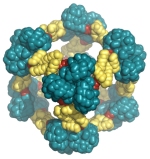
The Gelbart Lab is fascinated by the structural and mechanical properties of viruses- the complex structure and self-assembly of these nanoscale devices in detail provides a problem that is simultaneously at the forefront of statistical mechanics and the life sciences. Structural and Computational Biology Faculty
Dr. Hubbell's research is focused on understanding the relationship between the molecular structure of a protein and the conformational changes that control its function. Of particular interest are membrane proteins that behave as "molecular switches", i.e., proteins whose structures are switched to an active state by a physical or chemical signal. Structural and Computational Biology
Systems Biology and Biological Regulation Faculty Structural and Computational Biology
The Maynard group focuses on polymer chemistry and nano medicine. We design and synthesize polymeric mimics of natural molecules with the purpose of stabilizing proteins and siRNA. These materials are applied to wound healing, diabetes, and for the treatment of cancer. We also prepare polymers for conjugation of proteins to surfaces in specific orientations for diagnostics and biomaterials that control cell behavior. Structural and Computational Biology Faculty
Professor Margot Quinlan and her group use biochemistry, microscopy and genetic approaches to study regulation of the actin cytoskeleton. The group is currently focused on Spire (Spir) and Cappuccino (Capu), two proteins that collaborate to build an actin network essential for early body axis development. Combining an in vitro understanding of the mechanism of Spir and Capu with in vivo studies of polar cells will provide insight into how the actin cytoskeleton is regulated and a broader understanding of cell polarity. Systems Biology and Biological Regulation Metabolism Aging and Development Faculty Structural and Computational Biology
Professor Emil Reisler's group investigate cell motility and force generation mechanism of actin, tubulin, and a family of motor proteins. The aim of these studies is to obtain a structural description of the mechanism of motion and force generation. At the cellular level, the group studies the function, interactions, and structural transitions of the assembled protein systems. Structural and Computational Biology Systems Biology and Biological Regulation Faculty
Prof. Rodriguez studies the complex architecture of biological systems - from single biomolecules to cellular assemblies - at high resolution. His work is largely based on diffraction phenomena and combines computational, biochemical and biophysical experiments. The development of new methods is central to this work, particularly using emerging technologies in cryo-electron microscopy, nano and coherent x-ray diffraction, and macromolecular design. Combined, these tools can reveal undiscovered structures that broadly influence chemistry, biology, and medicine. Metabolism Aging and Development Bioenergy and the Environment Faculty Structural and Computational Biology
Research in the Spokoyny laboratory is devoted towards establishing new synthetic avenues, structural understanding, and applications for inorganic and organomimetic clusters. These efforts will reveal novel and potentially useful solutions to important problems in the field, including: catalysis, energy storage and selective recognition and labeling of biomolecules. Structural and Computational Biology Faculty
Related News
Mar 17, 2025
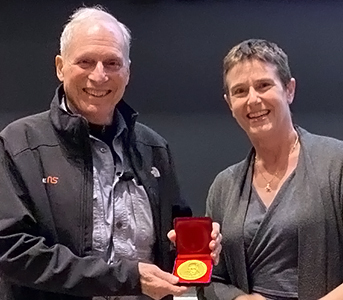
Professor David Eisenberg has been named the 2025 Alexander Rich Medalist by the Department of Chemistry at the Massachusetts Institute of Technology (MIT).
The Paul D. Boyer Professor of Biochemistry and Molecular Biology at UCLA,
Structural and Computational Biology Systems Biology and Biological Regulation Metabolism Aging and Development Bioenergy and the Environment
Mar 13, 2025
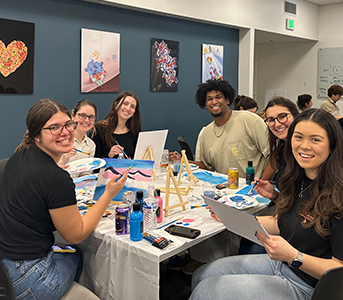
The UCLA graduate Biochemistry Student Association (gBSA) recently hosted its very first Wine and Paint Night, and it was a great success! On Friday, Feb. 28, chemistry and biochemistry graduate students and postdoctoral researchers gathered in Boyer 159 to create stunning artwork,
Structural and Computational Biology Systems Biology and Biological Regulation Metabolism Aging and Development Bioenergy and the Environment