Metabolism, Aging and Development
Metabolism, Aging and Development
Metabolism, Aging and Development researchers at UCLA conduct studies of spatial and temporal regulation of transcription and of the role of actin polymerization to determine cell polarity in Drosophila development and embryogenesis. Research also aims to understand the mechanisms of protein import into mitochondria, and to determine how defects in mitochondrial protein translocation lead to disease.
The group elucidates the metabolism of lipids, RNA, amino acids, and metals, and determining how regulation of synthesis, degradation, mobilization, and compartmentalization of these processes contribute to health, disease and aging. Further, the group studies how cells repair protein and small molecules to counteract spontaneous chemical damage associated with aging.
Faculty Research Summaries
Professor Guillaume Chanfreau's laboratory is interested in gene expression regulation in eukaryotic cells, with a particular emphasis on post-transcriptional steps. Within this large field, they are focusing on understanding how cells degrade RNAs that arise from malfunctions in gene expression pathways ("RNA surveillance"). In particular, they are analyzing the functions of the double-stranded RNA endonuclease RNase III and of the nonsense-mediated decay pathway in RNA surveillance, and how these enzymes regulate gene expression. Faculty Metabolism Aging and Development Systems Biology and Biological Regulation
Professor Catherine Clarke and the Clarke lab study the biosynthesis and functional roles of coenzyme Q (ubiquinone or Q). Q functions in mitochondrial respiratory electron transport and as a lipid soluble antioxidant. The group is using the yeast Saccharomyces cerevisiae (bakers yeast) to elucidate the biosynthetic metabolism of Q. Their experimental approach employs a combination of molecular genetics, lipid chemistry and biochemistry to delineate the steps responsible for Q biosynthesis. Metabolism Aging and Development Systems Biology and Biological Regulation Structural and Computational Biology Faculty
A major interest of Professor Steven Clarke's Laboratory is understanding the biochemistry of the aging process. The group is particularly interested in the generation of age-damaged proteins by spontaneous chemical reactions and the physiological role of cellular enzymes that can reverse at least some portion of the damage. They have focused their efforts on the degradation of aspartic acid and asparagine residues and the subsequent metabolism of their racemized and isomerized derivatives. The group is presently determining the biological role of protein methyltransferases that can initiate the conversion of D-aspartyl residues to the L-configuration as well as the conversion of isopeptide linkages to normal peptide bonds. Such "repair" reactions may greatly increase the useful lifetime of cellular proteins and may help insure organismal survival. View Professor Clarke's YouTube Lecture Metabolism Aging and Development Systems Biology and Biological Regulation Faculty
Professor Albert Courey and his group study the molecular basis of cell development. During embryogenesis, a cluster of apparently undifferentiated cells is transformed into an ordered array of differentiated tissues. Using Drosophila as a model system, his research group combines biochemical and genetic approaches to study the molecular basis of this amazing transformation. Essentially all the regulatory circuits they study are conserved throughout the animal kingdom. Therefore, their studies have important implications for human health and development. Metabolism Aging and Development Systems Biology and Biological Regulation Faculty
Professor David Eisenberg and his research group focus on protein interactions. In their experiments they study the structural basis for conversion of normal proteins to the amyloid state and conversion of prions to the infectious state. In bioinformatic work, they derive information on protein interactions from genomic and proteomic data, and design inhibitors of amyloid toxicity. Metabolism Aging and Development Structural and Computational Biology Faculty
Professor Carla Koehler and her research group encompass two major areas: Understanding the mechanism of protein import into mitochondria and determining the process by which defects in mitochondrial protein translocation lead to disease. Metabolism Aging and Development Systems Biology and Biological Regulation Faculty
Professor Margot Quinlan and her group use biochemistry, microscopy and genetic approaches to study regulation of the actin cytoskeleton. The group is currently focused on Spire (Spir) and Cappuccino (Capu), two proteins that collaborate to build an actin network essential for early body axis development. Combining an in vitro understanding of the mechanism of Spir and Capu with in vivo studies of polar cells will provide insight into how the actin cytoskeleton is regulated and a broader understanding of cell polarity. Metabolism Aging and Development Systems Biology and Biological Regulation Structural and Computational Biology Faculty
Prof. Rodriguez studies the complex architecture of biological systems - from single biomolecules to cellular assemblies - at high resolution. His work is largely based on diffraction phenomena and combines computational, biochemical and biophysical experiments. The development of new methods is central to this work, particularly using emerging technologies in cryo-electron microscopy, nano and coherent x-ray diffraction, and macromolecular design. Combined, these tools can reveal undiscovered structures that broadly influence chemistry, biology, and medicine. Bioenergy and the Environment Metabolism Aging and Development Structural and Computational Biology Faculty
The Tinoco lab will focus on the discovery and engineering of the chemistry occurring in microbiomes. The Tinoco research group will apply methods and tools from organic chemistry, enzymology, directed evolution and microbiology, as well as bioinformatics and multiomics, to discover new microbial genes, enzymes, and metabolites, expand the chemistry of microbiomes, and deepen our understanding of the chemical ecology in the human gut and oral microbiomes, and in environmental microbial communities. Specifically, we will (1) investigate the chemistry encoded in human gut bacteriophages, (2) discover microbial natural products from the human oral microbiome and elucidate their chemical ecology, and (3) evolve microbiomes for the biodegradation of pervasive environmental pollutants. Our research efforts will ultimately elucidate how microbial chemistry influences human biology and ecosystems, and will create innovative approaches that will advance the fields of chemistry, microbiology, and engineering. Metabolism Aging and Development Systems Biology and Biological Regulation Faculty
Related News
Mar 17, 2025
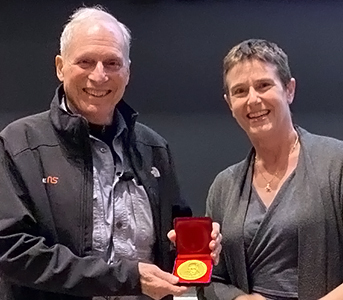
Professor David Eisenberg has been named the 2025 Alexander Rich Medalist by the Department of Chemistry at the Massachusetts Institute of Technology (MIT).
The Paul D. Boyer Professor of Biochemistry and Molecular Biology at UCLA,
Structural and Computational Biology Systems Biology and Biological Regulation Metabolism Aging and Development Bioenergy and the Environment
Mar 13, 2025
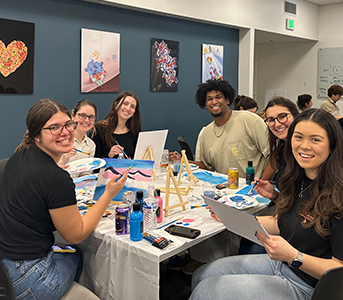
The UCLA graduate Biochemistry Student Association (gBSA) recently hosted its very first Wine and Paint Night, and it was a great success! On Friday, Feb. 28, chemistry and biochemistry graduate students and postdoctoral researchers gathered in Boyer 159 to create stunning artwork,
Structural and Computational Biology Systems Biology and Biological Regulation Metabolism Aging and Development Bioenergy and the Environment