Systems Biology and Biological Regulation
Systems Biology and Biological Regulation
Systems Biology and Biological Regulation research seeks to characterize the structural, biochemical, and in vivo functional properties of individual biomolecules and pathways with the cutting-edge approaches of modern genomics, proteomics, and metabolomics. It combines both experimental and computational approaches to model biological systems and tests the predictions of the models.
Investigators in this focus area are addressing questions concerning such topics as gene regulation at both transcriptional and post-transcriptional levels, metabolic regulation and homeostasis, regulation of cell shape and motility, intracellular transport and compartmentation, phylogenomics, and molecular evolution.
Faculty Research Summaries
Dr. James Bowie and his group are fascinated by protein structure, folding and stabilization. This interest has led them into three main areas: (1) learning how membrane proteins fold and how they can be stabilized; (2) the structures and biological functions of a biological polymer they discovered, that is formed by a very common protein module called a SAM domain; (3) developing and stabilizing enzyme pathways for the production of biofuels. Systems Biology and Biological Regulation Bioenergy and the Environment Structural and Computational Biology
Professor Guillaume Chanfreau's laboratory is interested in gene expression regulation in eukaryotic cells, with a particular emphasis on post-transcriptional steps. Within this large field, they are focusing on understanding how cells degrade RNAs that arise from malfunctions in gene expression pathways ("RNA surveillance"). In particular, they are analyzing the functions of the double-stranded RNA endonuclease RNase III and of the nonsense-mediated decay pathway in RNA surveillance, and how these enzymes regulate gene expression. Metabolism Aging and Development Faculty Systems Biology and Biological Regulation
Professor Catherine Clarke and the Clarke lab study the biosynthesis and functional roles of coenzyme Q (ubiquinone or Q). Q functions in mitochondrial respiratory electron transport and as a lipid soluble antioxidant. The group is using the yeast Saccharomyces cerevisiae (bakers yeast) to elucidate the biosynthetic metabolism of Q. Their experimental approach employs a combination of molecular genetics, lipid chemistry and biochemistry to delineate the steps responsible for Q biosynthesis. Metabolism Aging and Development Faculty Structural and Computational Biology Systems Biology and Biological Regulation
A major interest of Professor Steven Clarke's Laboratory is understanding the biochemistry of the aging process. The group is particularly interested in the generation of age-damaged proteins by spontaneous chemical reactions and the physiological role of cellular enzymes that can reverse at least some portion of the damage. They have focused their efforts on the degradation of aspartic acid and asparagine residues and the subsequent metabolism of their racemized and isomerized derivatives. The group is presently determining the biological role of protein methyltransferases that can initiate the conversion of D-aspartyl residues to the L-configuration as well as the conversion of isopeptide linkages to normal peptide bonds. Such "repair" reactions may greatly increase the useful lifetime of cellular proteins and may help insure organismal survival. View Professor Clarke's YouTube Lecture Metabolism Aging and Development Faculty Systems Biology and Biological Regulation
Professor Robert Clubb is developing methods to produce biofuels from sustainable plant biomass. Lignocellulosic plant biomass is an attractive feedstock for the sustainable production of biofuels, chemicals, and materials because it is renewable, highly abundant, and inexpensive. A major obstacle limiting its industrial use is the lack of low-cost technologies to degrade lignocellulose into its component sugars. Using synthetic biology methods, his group is engineering microbes to display surface multi-enzyme complexes that enable them to breakdown plant biomass efficiently. Ultimately, they hope to use this technology to create a consolidated bioprocessor, a single microbe that has the ability to convert lignocellulose into biofuels and other valuable commodities. Systems Biology and Biological Regulation Bioenergy and the Environment Faculty Structural and Computational Biology
Professor Albert Courey and his group study the molecular basis of cell development. During embryogenesis, a cluster of apparently undifferentiated cells is transformed into an ordered array of differentiated tissues. Using Drosophila as a model system, his research group combines biochemical and genetic approaches to study the molecular basis of this amazing transformation. Essentially all the regulatory circuits they study are conserved throughout the animal kingdom. Therefore, their studies have important implications for human health and development. Systems Biology and Biological Regulation Metabolism Aging and Development Faculty
Professor Juli Feigon and her research group study nucleic acid structure and specific recognition of nucleic acids by proteins. Her group focuses on determining the three-dimensional structures of DNA and RNA, and on investigating their interactions with various proteins and ligands, and to study nucleic acid folding. Systems Biology and Biological Regulation Bioenergy and the Environment Faculty Structural and Computational Biology
Professor Carla Koehler and her research group encompass two major areas: Understanding the mechanism of protein import into mitochondria and determining the process by which defects in mitochondrial protein translocation lead to disease. Systems Biology and Biological Regulation Metabolism Aging and Development Faculty
Professor Sri Kosuri and his lab develop technologies to make the elucidation and engineering of biological systems faster and simpler. They apply these technologies to uncovering mechanisms in gene regulation, as well as emerging applications in synthetic biology. In particular, the laboratory develops and combines three recent technologies: DNA synthesis, DNA sequencing, and genome engineering. First, they develop methods to build large libraries of synthetic DNA sequences using low-cost DNA microarrays. This allows them to build thousands to millions of designed constructs for modest cost. Second, they develop new measurement technologies using next-generation sequencing that allows them to test the functionality of these synthetic DNA libraries simultaneously. Finally, using new genomic engineering technologies, they can do these large-scale synthesis/sequencing experiments in a wide-variety of cell types and organisms. Systems Biology and Biological Regulation
Professor James Liao and his group focus on metabolism, including its biochemistry, extension, and regulation. His group uses metabolic engineering,synthetic biology, and systems biology to construct microorganisms to produce next generation biofuels and to study the obesity problem in human. Their ultimate goal is to use biochemical methods to replace petroleum processing and to treat metabolic diseases. Systems Biology and Biological Regulation
Systems Biology and Biological Regulation Faculty Structural and Computational Biology
The Merchant research program focuses on trace metal metabolism using Chlamydomonas as a reference organism. The group uses a combination of classical genetics, genomics and biochemistry to discover mechanisms of trace metal homeostasis in Chlamydomonas, especially mechanisms for reducing the quota or for recycling in situations of deficiency. Systems Biology and Biological Regulation
Professor Margot Quinlan and her group use biochemistry, microscopy and genetic approaches to study regulation of the actin cytoskeleton. The group is currently focused on Spire (Spir) and Cappuccino (Capu), two proteins that collaborate to build an actin network essential for early body axis development. Combining an in vitro understanding of the mechanism of Spir and Capu with in vivo studies of polar cells will provide insight into how the actin cytoskeleton is regulated and a broader understanding of cell polarity. Systems Biology and Biological Regulation Metabolism Aging and Development Faculty Structural and Computational Biology
Professor Emil Reisler's group investigate cell motility and force generation mechanism of actin, tubulin, and a family of motor proteins. The aim of these studies is to obtain a structural description of the mechanism of motion and force generation. At the cellular level, the group studies the function, interactions, and structural transitions of the assembled protein systems. Systems Biology and Biological Regulation Faculty Structural and Computational Biology
Professor Yi Tang's research lab is interested in natural product biosynthesis and biocatalysis. In the natural product area, they are interested in elucidating biosynthetic pathways of polyketides, nonribosomal peptides and related compounds. Their goal is to understand the biochemical and structural basis of different enzymes encoded in these pathways. In particular, they are studying the biosynthesis of aromatic polyketides from Streptomyces and iteratively biosynthesized compounds from filamentous fungi. By accumulating biosynthetic knowledge and enzymatic tools, they aim towards the engineered biosynthesis of unnatural natural products through combinatorial biosynthesis. Systems Biology and Biological Regulation Faculty
The Tinoco lab will focus on the discovery and engineering of the chemistry occurring in microbiomes. The Tinoco research group will apply methods and tools from organic chemistry, enzymology, directed evolution and microbiology, as well as bioinformatics and multiomics, to discover new microbial genes, enzymes, and metabolites, expand the chemistry of microbiomes, and deepen our understanding of the chemical ecology in the human gut and oral microbiomes, and in environmental microbial communities. Specifically, we will (1) investigate the chemistry encoded in human gut bacteriophages, (2) discover microbial natural products from the human oral microbiome and elucidate their chemical ecology, and (3) evolve microbiomes for the biodegradation of pervasive environmental pollutants. Our research efforts will ultimately elucidate how microbial chemistry influences human biology and ecosystems, and will create innovative approaches that will advance the fields of chemistry, microbiology, and engineering. Systems Biology and Biological Regulation Metabolism Aging and Development Faculty
Professor Jorge Torres’ research group is interested in understanding the mechanisms of cell division. Currently they are discovering and characterizing novel enzymatic activities that are critical for cell division (cancer targets) and discovering or designing small molecules that can inhibit their function (anti-cancer agents). To do this, they are taking multidisciplinary approaches that utilize human cancer cell lines and high throughput proteomic and small molecule screening with a combination of disciplines, including biochemistry, cell biology, chemoinformatics, chemical biology and microscopy. Systems Biology and Biological Regulation Faculty
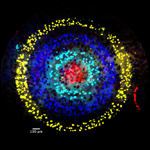
The Wollman lab is interested in understanding principles of information processing in intracellular and intercellular signaling networks in the presence of a high degree of single-cell variability. The lab utilizes a systems biology approach that merges computational and experimental tools with a focus on microscopy and single cell dynamics. Systems Biology and Biological Regulation Faculty
Related News
Mar 17, 2025
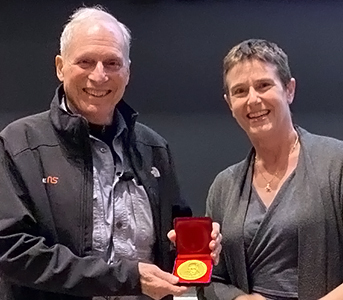
Professor David Eisenberg has been named the 2025 Alexander Rich Medalist by the Department of Chemistry at the Massachusetts Institute of Technology (MIT).
The Paul D. Boyer Professor of Biochemistry and Molecular Biology at UCLA,
Structural and Computational Biology Systems Biology and Biological Regulation Metabolism Aging and Development Bioenergy and the Environment
Mar 13, 2025
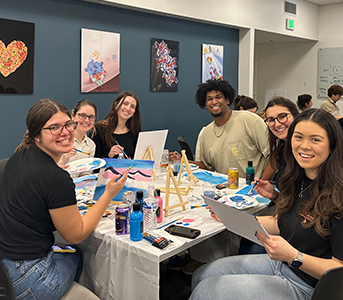
The UCLA graduate Biochemistry Student Association (gBSA) recently hosted its very first Wine and Paint Night, and it was a great success! On Friday, Feb. 28, chemistry and biochemistry graduate students and postdoctoral researchers gathered in Boyer 159 to create stunning artwork,
Structural and Computational Biology Systems Biology and Biological Regulation Metabolism Aging and Development Bioenergy and the Environment